
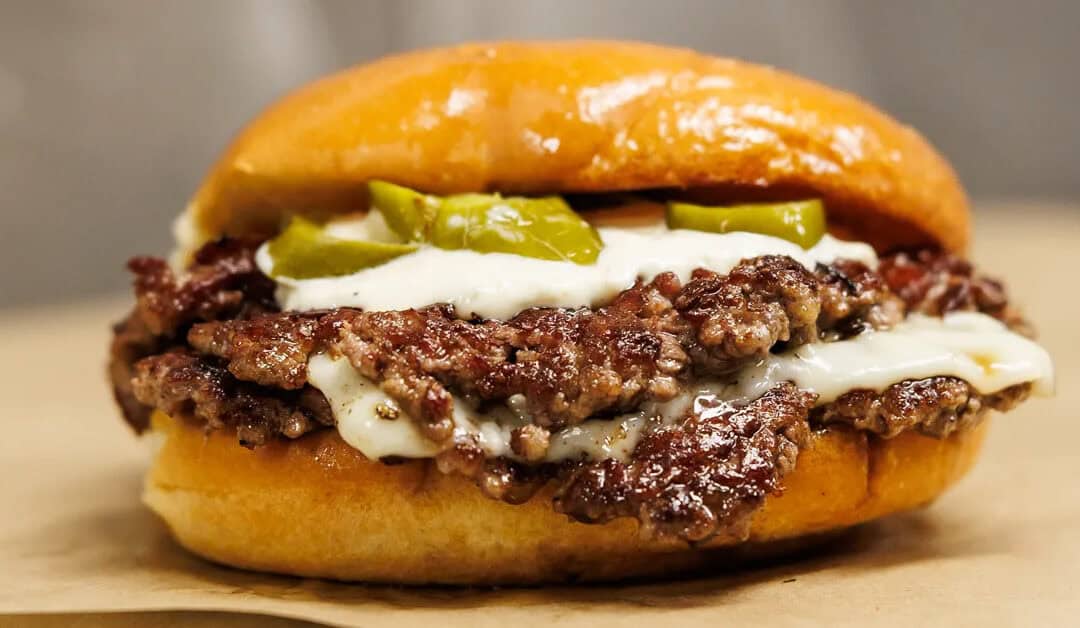
Most burgers in Cyprus fail before the patty hits the grill. Not because of the meat. Not because of the sauce. Because of the bun. And specifically, because most spots are using the wrong one. We’ve built every Fat Bull potato bun burger around a deliberate bread choice since 2017, and the difference shows up by bite three.
What is a potato bun, actually?
A potato bun is a soft enriched roll made with potato (mashed, riced, or potato flour) worked into the dough. The starch in the potato changes everything. It holds water differently than wheat alone, which means the bun stays soft for longer, has a tighter crumb, and resists falling apart when it meets fat, juice, and sauce.
The texture sits between a brioche and a milk bun. Pillowy but with structure. Slight sweetness, but not dessert-sweet. Pale yellow inside instead of stark white.
You’ve eaten them without knowing. Shake Shack uses them. In-N-Out uses them. Every serious burger operation in New York and Tokyo has moved to potato buns or a potato-enriched hybrid in the last decade. There’s a reason.
Why brioche is overused in Cyprus
Brioche became the default “premium” burger bun about ten years ago and a lot of restaurants in Cyprus are still riding that wave. It looks expensive. It sounds French. It’s golden and shiny and photographs well.
It’s also the wrong bread for a serious burger.
Brioche is a dessert dough. Real brioche is around 50% butter to flour by weight. It’s designed to be eaten on its own with jam and coffee. The high fat content means it tears easily, absorbs sauce instantly, and turns to mush the moment a juicy patty sits on it for more than ninety seconds. That’s why your “premium brioche burger” arrives at the table dripping through the wrapper, with the bottom bun already disintegrated.
Most “brioche” buns in Cyprus aren’t even real brioche. They’re a sweet enriched bun pretending to be brioche, churned out by industrial bakeries, often with shelf-life additives that change the crumb. You can spot them: too uniform, too yellow, too sweet on the finish. They taste like a slightly fancy hot dog roll.
We tested brioche when we opened. We tested it again two years later. Both times it failed the only test that matters: bite three. By bite three, the structure is gone, the sauce is on your hands, and the burger has stopped being a burger.
Why sesame buns fail the moment fat shows up
The other half of Cyprus is still using sesame seed buns. Either the standard supermarket variety or a slightly upgraded bakery version with a glossy egg wash.
Sesame buns are fine. They’re also the wrong tool. They’re built for thin fast-food patties with minimal fat and a single sauce. The moment you put a real burger underneath one, a hand-pressed patty cooked to medium with proper rendering, the bun gives up. The bottom soaks. The top dries out because there’s no fat in the dough to keep it pliable. By the time you finish, you’re eating the patty with your hands and pretending the bun was a delivery vehicle.
If your bun is a delivery vehicle, your burger is broken.
What a potato bun actually does on a serious burger
Three things. None of them are subtle.
First, structure. The starch network in a potato bun absorbs juice without collapsing. You can put a 180g patty cooked medium, two slices of cheese, sauce, and pickles on it, and the bottom bun will still be intact when you finish. We’ve timed this. Brioche fails at around two minutes from plate. A properly made potato bun holds for six to eight.
Second, flavour balance. Potato buns are mildly sweet, which is exactly what a savoury, salty, fat-rich burger needs to push back against. Brioche oversweetens. Sesame undersweetens. Potato sits right in the middle and lets the meat lead.
Third, mouthfeel. Bite a potato bun and it gives, then closes back. It doesn’t shatter, it doesn’t squash flat. The texture is part of why a burger feels like a burger and not a sandwich.
We toast ours on the flat-top with a pass of butter. Cut side down, ninety seconds, until it’s golden and crisp on the inside face but still soft on the dome. That toasted layer is the seal that stops sauce migration. Most places skip this step or do it lazily. It’s the difference between a burger you remember and a burger you forget.
When we use brioche (yes, sometimes)
We’re not anti-brioche. We use a toasted brioche on specific builds where the flavour profile actually calls for it. The Umami Burger gets brioche because the heavier savoury load benefits from a touch more sweetness on top.
The point isn’t that one bun is universally better. The point is that the bun is a deliberate choice, not a default. Most spots in Cyprus default to whatever their bakery delivers. We spec our buns. There’s a difference, and you taste it on bite three.
How to spot a serious burger spot by the bun alone
You don’t need to taste the food. Look at the bun.
If it’s pale yellow with a tight, soft crumb and a slight dome, you’re in good hands. If it’s overly shiny and uniform, you’re getting industrial brioche. If it’s covered in sesame seeds and looks like it came out of a plastic sleeve, the kitchen isn’t taking the bread seriously and probably isn’t taking anything else seriously either.
The bun is the cheapest, easiest part of a burger to upgrade. When a restaurant hasn’t bothered, that tells you everything about the rest of the operation.
The short version
Potato buns hold. Brioche sogs. Sesame fails. The bread is half the burger and most of Cyprus is treating it like an afterthought.
We don’t. That’s why our burgers eat the way they do.
If you want to taste the difference, order a Fat Bull Burger or an Umami Burger from our Limassol or Nicosia kitchens and pay attention to bite three. That’s where the bun decision becomes obvious.
You can also read our story to understand why we obsess over details like this, or check the full menu to see every burger we’ve built around the right bread.
Frequently Asked Questions
What is a potato bun made of?
A potato bun is an enriched bread made with wheat flour and potato, either mashed, riced, or as potato flour. The potato starch changes the dough’s water absorption and gives the bun a softer, more durable texture than standard wheat buns.
Are potato buns better than brioche for burgers?
For most burger builds, yes. Potato buns hold structure under juice and fat far longer than brioche, which is essentially a butter-rich dessert dough. Brioche works for specific applications but fails as a default burger bun.
Where can I find a burger with a real potato bun in Cyprus?
The Fat Bull Co. has used potato buns since 2017 across both Limassol (Steliou Kyriakidi 27, Tsireio) and Nicosia (Nikou Kranidioti 7, Egkomi) locations. Order online at order.thefatbullco.com.
Why do most Cyprus burgers use the wrong bun?
Most local burger spots use whatever a wholesale bakery delivers, usually a generic brioche-style or sesame bun built for shelf life rather than for the eating experience. Speccing a proper potato bun costs more and requires a relationship with a baker who’ll make it correctly.
Are potato buns sweet?
Mildly sweet, but far less than brioche. The sweetness is balanced enough to complement a savoury, fat-rich patty without dominating the flavour profile.